Investment Project in the Emirates – Sustainable Solutions for Oil & Gas Industry
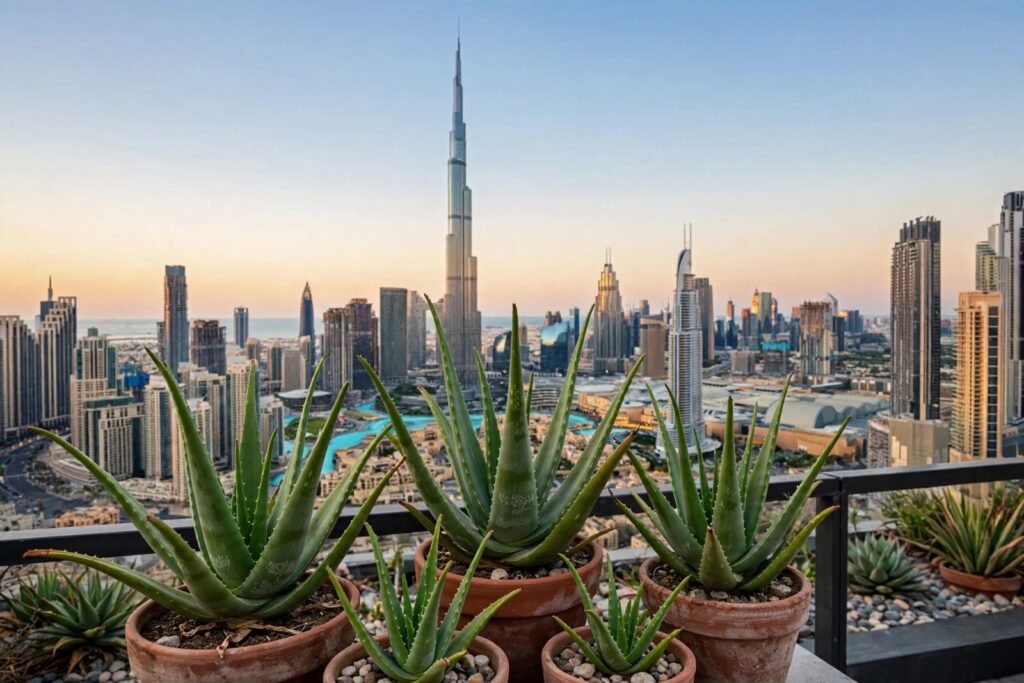
Investment Project in the Emirates – Sustainable Solutions for Oil & Gas Industry. In recent years, we have received numerous inquiries regarding investment projects in the United Arab Emirates.
In order to translate that idea into concrete actions, we have developed a formal and concrete investment project, with the objective to establish Aloe Vera plantations and progressing toward an industrial processing and product-development platform capable of supplying oil and gas solutions, as well as other aloe based solutions for other industries.
The proposed Aloe program is therefore not conceived as a conventional plantation project. It is proposed as an Aloe Vera Agricultural, Industrial and Employment Platform linking:
→ Climate-resilient crop production
→ Centralized processing
→ Technology transfer
→ Product development
→ Domestic and regional commercialization
→ Export-oriented manufacturing
1. Executive Summary of the Project
The proposed project is an integrated Aloe vera agricultural, processing and manufacturing platform in the United Arab Emirates (UAE).
It combines commercial cultivation with centralized processing, technology transfer, formulation and manufacture of higher-value plant-derived products for industrial customers.
The first commercial phase is planned around 50 hectares of Aloe vera, approximately 750,000 plants and a target annual harvest of 4,000 tonnes of fresh leaves.

The planning basis is approximately 330 tonnes per month, or 15–16 tonnes per day over 260 working days. The industrial facility is sized for up to 3.0 million liters of finished products per year, subject to validated mass balance and customer demand.
The project is designed to capture value locally rather than sell only raw agricultural material. The proposed value chain spans cultivation, processing, formulation, laboratory quality control, packaging, distribution and exports.
| Headline item | Preliminary planning estimate |
| Initial agricultural footprint | 50 hectares; possible later expansion to 200 hectares |
| Plant population | Approximately 750,000 plants at 15,000 plants/ha |
| Target fresh-leaf output and supply profile | 4,000 tonnes/year at 80 t/ha/year; approximately 330 t/month and 15–16 t/day over 260 working days |
| Indicative finished-product capacity | Up to 3.0 million litres/year, subject to process validation |
| Indicative CAPEX | $7,450,000 |
| Indicative DEVEX | $785,000 |
| Initial working capital allowance | $2,500,000 |
| Total initial funding envelope | $10,735,000 |
| Mature annual revenue at net realized price and 100% capacity | $22,500,000 |
| Mature annual EBITDA after royalty at 100% capacity | $6,465,000 |
| Mature EBITDA margin after royalty | 28.7% |
| Indicative break-even volume | 489,320 L/year (16.3% of nominal capacity) |
| Indicative project IRR after royalty | 12.36% |
| Indicative cumulative cash recovery | Year 8 |
2. Project Concept and Scope
The project is conceived as a UAE-based Aloe vera Agricultural, Industrial and Employment Platform linking:
- Climate-adapted crop production and efficient irrigation
- Centralized processing and stabilization of aloe raw material
- Technology transfer, training and local technical capability
- Product development and quality assurance
- Local supply to UAE industrial customers
- Export-oriented manufacturing for the Gulf region and other selected markets
Initial phase and expansion logic
The 50-hectare case is the reference case for the financial estimates in the project. The final objective is a 200-hectare expansion, but it would require a separate scale-up assessment, including water allocation, land availability, nursery capacity, process throughput, storage, logistics, working capital and market demand. Costs should not be extrapolated linearly without engineering and agronomic validation.
Proposed project boundaries
The initial project includes a commercial plantation, nursery and agricultural infrastructure; an aloe processing line; a formulation and blending facility; a quality-control laboratory; packaging and warehousing; environmental, safety and utility systems; and a technical-commercial program to qualify products with industrial customers.
3. Agricultural Development and Location
The potential areas for aloe cultivation are among the following locations:
- Al Dhayd in Sharjah
- Al Aweer in Dubai
- Coastal area of Fujairah
- Al Manama in Ajman
- Al Hamraniyah in Ras al-Khaimah
- Falaj al Mualla in Umm al Qawain
The agricultural interior zones (Al Dhayd, Falaj Al Mualla, and Al Hamraniyah) are the best options for establishing industrial-scale aloe vera cultivation in the UAE.
The draft gives priority to the agricultural interior zones, particularly Al Dhayd/Al Dhaid, Al Hamraniyah and Falaj Al Mualla.
| Candidate area | Initial assessment from concept draft | Key diligence requirement |
| Al Dhayd / Al Dhaid, Sharjah | Strong candidate due to agricultural tradition and road links | Verify land tenure, water quality, sustainable water allocation and actual lease costs |
| Al Hamraniyah, Ras Al Khaimah | Potentially suitable agricultural area with irrigation expertise | Confirm site availability, permits, water quality and access to industrial site |
| Falaj Al Mualla, Umm Al Quwain | Potentially cost-effective interior option | Verify groundwater sustainability, land parcel size and permit pathway |
| Al Manama, Ajman | Potentially viable but potentially fragmented land base | Confirm contiguous area sufficient for expansion |
| Al Aweer, Dubai | Urban and land-cost constraints may be material | Proceed only if a specific site offers a clear commercial advantage |
| Coastal Fujairah | Potential salinity and land-use constraints identified in draft | Require detailed salinity, soil and water assessment before consideration |
Agricultural planning basis
| Parameter | Planning assumption |
| Plantation area | 50 ha |
| Planting density | 15,000 plants/ha |
| Total plants | 750,000 |
| Target yield | 80 tonnes of fresh leaves/ha/year |
| Annual fresh-leaf supply | 4,000 tonnes |
| Average monthly supply (annualized) | Approximately 330 tonnes/month |
| Average daily supply | 15–16 tonnes/day over 260 working days |
The target yield is a preliminary assumption and should not be represented as a guaranteed UAE yield. Aloe productivity depends on cultivar identity, plant age, irrigation-water salinity, soil drainage, heat management, planting material quality, nutrition, pest management and harvesting practices.
Agricultural due diligence
- Botanical authentication and plant health certification for imported planting material
- Soil texture, salinity, drainage, pH and nutrient analysis
- Water availability, water rights, salinity, boron and other relevant water-quality parameters
- Irrigation design and water-use efficiency assessment
- Field trials across at least one representative growing cycle
- Labor, machinery, harvest frequency and transport-cost validation
- Environmental approvals, biosecurity, import permits and quarantine requirements
4. Industrial Platform and Product Portfolio

The processing facility should operate as an aloe biorefinery, seeking to generate several useful fractions and finished products rather than relying on a single commodity.
The final process design will depend on whether the selected products require whole-leaf material, inner-fillet material, liquid extracts, concentrated fractions or other stabilized intermediates.
Potential industrial locations
| Location | Potential strategic fit | Decision criteria |
| ICAD, Abu Dhabi | Proximity to energy, petrochemical and industrial customers | Customer access, chemical/manufacturing approvals, land and utility cost |
| JAFZA, Dubai | Logistics, import/export connectivity and international distribution | Lease and service costs, process permissions, customs/tax treatment and site fit |
| Hamriyah Free Zone, Sharjah | Industrial and energy-sector ecosystem; potentially competitive operating costs | Utilities, permits, warehouse/plant options, port access and total landed cost |
The final site should be selected through a comparative feasibility study. The project may also evaluate a split model in which cultivation and primary processing are located close to farms while final formulation and export logistics are located in an industrial or free-zone site.
Priority 1 — Oil and gas products

The first commercial priority is the oil and gas sector, including upstream, midstream, downstream and petrochemical operations. Aloetrade’s published portfolio includes the following product families; local manufacture and customer use remain subject to formulation transfer, UAE regulatory requirements, qualification testing and commercial agreement.
- NOCORGREEN family — corrosion inhibitors for general industrial use, wells and selected pipeline services.
- STOPSCALE — scale inhibition for wells, pipelines, surface facilities and selected industrial-water applications.
- ALOETITAN / ALOETITAN HYDRO — combined corrosion/scale functions and hydrostatic-test applications, where validated.
- ALOECIDE family — aloe-based biocide supplements for selected water and oilfield applications, subject to efficacy and regulatory review.
- ALOEFRICRED family — friction reduction for pipelines and hydraulic fracturing fluids.
- ALOEFLOW HV — flow improvement for heavy crude oil transport.
- DRAGALOE — drag-reducing agent for light crude, refined products and gas, subject to product-specific validation.
- ALOEGEL and ALOECUREFRAC — gelling and fluid-loss-control functions for selected hydraulic-fracturing applications.
- REMEDIALOE and SURFACTALOE — remediation, drilling-fluid and soil-treatment applications.
- ALOERECOVER — plant-derived polymer concept for selected enhanced-oil-recovery applications.
- COAGREEN and FLOCGREEN — coagulant and flocculant solutions for industrial and oilfield wastewater treatment.
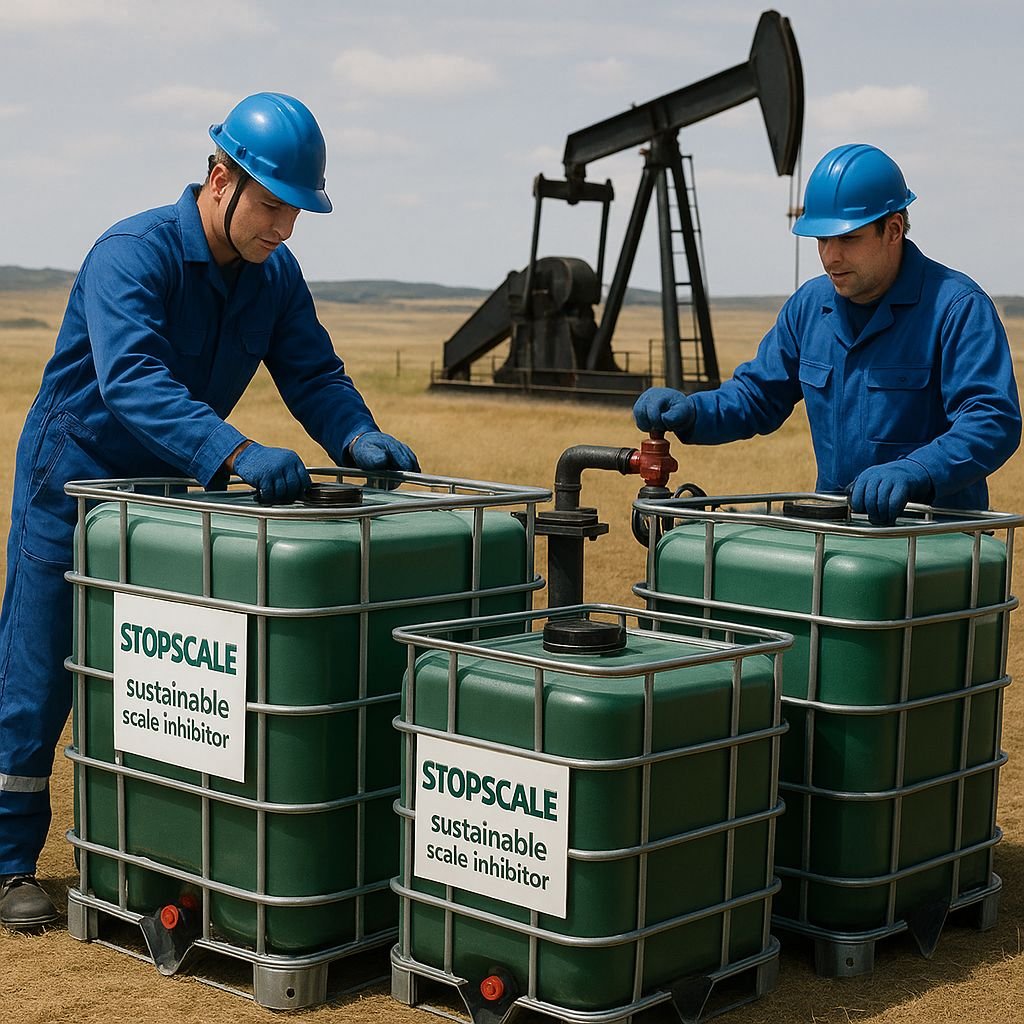
The commercial launch should prioritize a limited set of products with the strongest evidence of performance, customer urgency and regulatory fit. A phased portfolio is preferable to attempting to qualify every product simultaneously. More details can be found at https://aloetradeamerica.com/aloe-sustainable-products-for-oil-gas-industry/
Priority 2 — Water, wastewater and desalination
The second commercial priority is industrial water treatment, municipal and industrial wastewater, oilfield produced water and desalination. Potential applications include:
- Plant-derived coagulants and flocculants for selected clarification and solids-separation processes.
- Corrosion inhibitors for relevant equipment, tanks, piping and heat-transfer systems.
- Scale inhibitors for selected mineral-scaling conditions.
- Biocide supplements for applications where efficacy, compatibility and regulatory requirements are met.
- Treatment support for industrial wastewater and selected desalination pretreatment or ancillary processes.
Water-treatment performance must be demonstrated against the actual feed-water chemistry and incumbent treatment program.
Desalination is not a single treatment duty: product selection depends on the technology (for example, reverse osmosis or thermal desalination), pretreatment train, membrane compatibility, scaling risk, discharge requirements and plant operator specifications.
Priority 3 — Aloe concentrates and industrial ingredients
Potential intermediate products include stabilized single-strength Aloe liquid (1X), concentrated aloe liquids and polysaccharide-rich fractions. Potential customers include ingredient distributors, personal-care manufacturers and selected food or beverage manufacturers, subject to the relevant food, cosmetic, ingredient and product-quality regulations.
Priority 4 — Private-label personal care

Once the core industrial platform is operating reliably, the plant could consider aloe soaps, aloe hand wash, aloe lotions, aloe creams, aloe skin gels, aloe shampoos, aloe conditioners and after-sun aloe products.
These may serve UAE consumer brands, hotels, pharmacies, retailers and contract-manufacturing customers. This is a secondary opportunity and should not distract from industrial product qualification in the initial phase.
5. UAE Strategic Alignment and Sustainability
The project can contribute to several United Nations Sustainable Development Goals (SDGs) reflected in the UAE’s engagement with the UN 2030 Agenda. Alignment is potential and should be evidenced through measurable outcomes rather than treated as automatic certification.
| SDG | Potential project contribution | Possible indicator |
| SDG 6 — Clean Water and Sanitation | Develop plant-derived options for selected water and wastewater treatment duties | Customer trials completed; water treated; performance and compliance data |
| SDG 8 — Decent Work and Economic Growth | Create agricultural, technical, manufacturing and commercial employment | Direct jobs, training hours, local procurement and wage data |
| SDG 9 — Industry, Innovation and Infrastructure | Establish local processing, formulation, testing and manufacturing capability | Local production volume, products qualified, R&D and testing investment |
| SDG 12 — Responsible Consumption and Production | Use aloe biomass in multiple product streams and reduce avoidable residues | Material balance, waste intensity and by-product utilization |
| SDG 13 — Climate Action | Assess the crop’s fit for arid agriculture and measure operational impacts | Water intensity, energy intensity and verified emissions data |
| SDG 17 — Partnerships for the Goals | Build partnerships among investors, UAE entities, customers and technology providers | Commercial partnerships, knowledge-transfer milestones and local suppliers |
Sustainability claims should be supported by data. The project should not assume that aloe cultivation is water-free or that all finished products are automatically biodegradable, non-toxic or suitable for discharge.
Water consumption, salinity, energy use, life-cycle impacts, formulation composition and performance should be assessed and documented.
6. Technology Transfer and Implementation
Aloetrade America LLC is proposed as the technology and technical partner. The scope may include agricultural know-how, process design support, formulation and manufacturing know-how, training, standard operating procedures, quality-control methods, product documentation and commercialization assistance.
- Agronomy: plantation layout, planting density, crop establishment, irrigation, harvesting, monitoring and training.
- Industrial processing: process selection, equipment specifications, extraction and stabilization protocols, concentration, drying, quality control and SOPs.
- Product development: formulation transfer under manufacturing licenses, pilot batches, scale-up support and product-specific test protocols.
- Commercialization: technical dossiers, packaging selection, customer qualification, private-label development, distribution and export preparation.
7. GCC Regional Market Opportunity

The commercial opportunity extends beyond the UAE to Saudi Arabia, Qatar, Oman, Kuwait and Bahrain.
The most relevant demand pools for the proposed portfolio are oilfield specialty chemicals (including corrosion and scale inhibitors, friction reducers and flow improvers), industrial and municipal water/wastewater treatment chemicals, and selected desalination-related pretreatment and ancillary duties.
For the GCC — water and wastewater treatment chemicals, IMARC estimates USD 820.8 million in 2025 and USD 1.946 billion by 2034. MarketsandMarkets reports USD 1.743 billion in 2025 and USD 2.265 billion by 2030; the different totals reflect different scope/methodologies and are not directly comparable.
8. Financial Details
For more information on CAPEX, OPEX, DEVEX, Production, Sales and Revenue Model and Main financial return and Investment Metrics, please contact direct with us.
Our Background
Aloetrade America LLC is a company incorporated in 2005 under the laws of the State of Florida, United States, and its main activities encompass the following areas:
Development of Agricultural, Environmental, and Industrial Projects
• Preparation, management, and execution of agricultural and industrial processing projects for aloe and other succulent plants.
• Preparation, management, and execution of agricultural and industrial processing projects for fruits and vegetables for export.
• Preparation, management, and execution of industrial processing projects for biofertilizers.
• Preparation, management, and execution of industrial processing projects for agri-food products.
• Preparation, management, and execution of carbon capture and renewable energy projects.
• Preparation, management, and execution of projects to combat desertification.
• Preparation, management, and execution of sustainable projects for the mining, oil, and gas industries.
Technology Transfer
• Technology transfer through the sale of technical assistance, technology transfer, and validated know-how for various industries related to the projects mentioned above.
Commercial Activities
• Marketing of aloe and other succulent plants, and the sale and distribution of products and services related to the aloe business.
• Marketing of biofertilizers.
• Marketing of fresh fruits and vegetables in wholesale markets in the United States and Mexico.
The Aloetrade America LLC team has over 25 years of international experience, during which it has developed 40 agricultural projects and 28 industrial projects for the processing and industrialization of aloe vera.
The company has also developed production and industrialization projects for fresh agricultural products in Mexico, destined for the US, European Union, Japanese, Chinese, and Canadian markets.
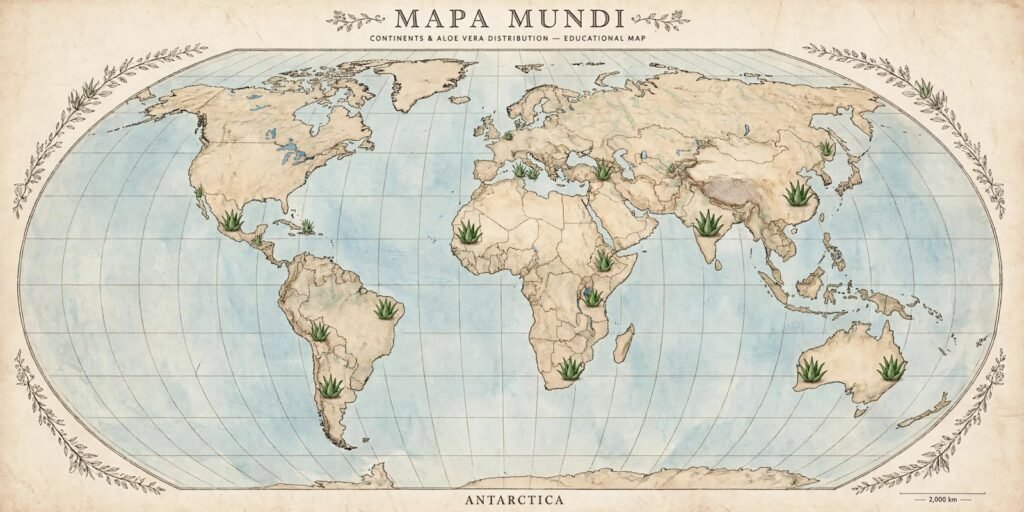
These operations have been carried out under the administration of both Aloetrade America LLC and Aloetrade Latin America SA (a former company based in Panama) and encompass the direction, administration, and management of agricultural and industrial projects with various producing and processing companies on the main continents, namely:
• Americas
Argentina, Brazil, Canada, Chile, Colombia, Ecuador, United States, Mexico, Panama, Paraguay, Peru, Dominican Republic, Uruguay, and Venezuela
• Europe
Cyprus, Spain, Italy, Georgia, Greece, and Portugal
• Africa
Algeria, Ethiopia, Kenya, Somaliland, Tanzania, and South Africa
• Asia
United Arab Emirates, Georgia, India and Pakistan
Since 2003, Aloetrade America LLC has trained more than 600 aloe producers throughout Latin America, Spain, and Portugal. It is headquartered in Florida (USA) and has representative offices in Mexico and Argentina.
For more information on this project please read our presentation on Investment in the Emirates.
Read more details at our post INVESTING IN THE UAE: A NEW GREEN CHEMISTRY PLATFORM BASED ON ALOE VERA FOR THE GULF REGION
Contact Information
These aloe based projects are highly relevant to local and foreign investors interested in developing business in the United Arab Emirates.
If you or your company would like more details regarding these potential projects, please write to info (at) aloetradeamerica.com or visit our contact page.
Contact us via WhatsApp or visit our social media channels for further information about our company.
Thank you for your interest in this project.